

How much mobile data do you really need each month? The answer depends less on how often you use your phone and more on what you do with it. Messaging and navigation use relatively little data, while social media, video calls and streaming can quickly consume several gigabytes. Understanding where your data goes makes it much easier to choose a mobile plan that actually fits your everyday habits.
What Does 1 GB Of Mobile Data Actually Mean?
One gigabyte may sound like a lot, but how long it lasts depends entirely on how you use it. Sending messages, checking emails and occasionally looking something up online require relatively little data, meaning 1 GB can stretch surprisingly far for a light user. Start watching videos or scrolling through video-heavy social media feeds, however, and the same allowance can disappear much faster. It is also worth remembering that apps, devices and streaming services use different amounts depending on settings such as video quality, autoplay and background activity, so data figures should always be treated as estimates rather than exact numbers.
WhatsApp And Messaging Use Relatively Little Data
If you mainly use your phone for messaging, you probably need less mobile data than you think. Text-based conversations on WhatsApp use very little data, although sending photos, videos, voice messages and making calls increases consumption. Regular voice calls are still relatively light compared with video, making messaging apps a good option when you have a limited data allowance. The biggest difference comes when conversations become more media-heavy, especially when large videos are automatically downloaded over your mobile connection.
Google Maps Is Usually More Data-Friendly Than Expected
Using Google Maps for navigation does require a mobile connection for features such as live traffic information, searches and route updates, but navigation itself is generally much less data-intensive than streaming video or scrolling through social media. If you use Maps frequently while travelling, downloading an area for offline use before leaving your hotel or home can reduce your data usage even further. This is particularly useful abroad, where you may be relying on a smaller roaming or prepaid data allowance.
Instagram And TikTok Can Use Data Quickly
Social media is where mobile data consumption can start increasing significantly. Apps such as Instagram and TikTok continuously load photos, Stories, Reels and videos as you scroll. Because so much content is video-based and often starts playing automatically, an hour of scrolling can use hundreds of megabytes and potentially much more depending on video quality and your viewing habits. If social media is a major part of your daily phone use, a 1 GB or 2 GB plan is unlikely to feel generous for long.
Spotify Uses Less Data Than Video Streaming
Music streaming is relatively predictable because the amount of data used is closely linked to audio quality. Spotify offers several quality settings, ranging from approximately 24 kbit/s on Low to around 320 kbit/s on Very High for Premium users. At Normal quality, which is around 96 kbit/s, an hour of music works out at roughly 43 MB, while Very High quality can use around 144 MB per hour. Downloading playlists over Wi-Fi before leaving home is an easy way to reduce this almost entirely while you're out.
Netflix And Video Streaming Use The Most Data
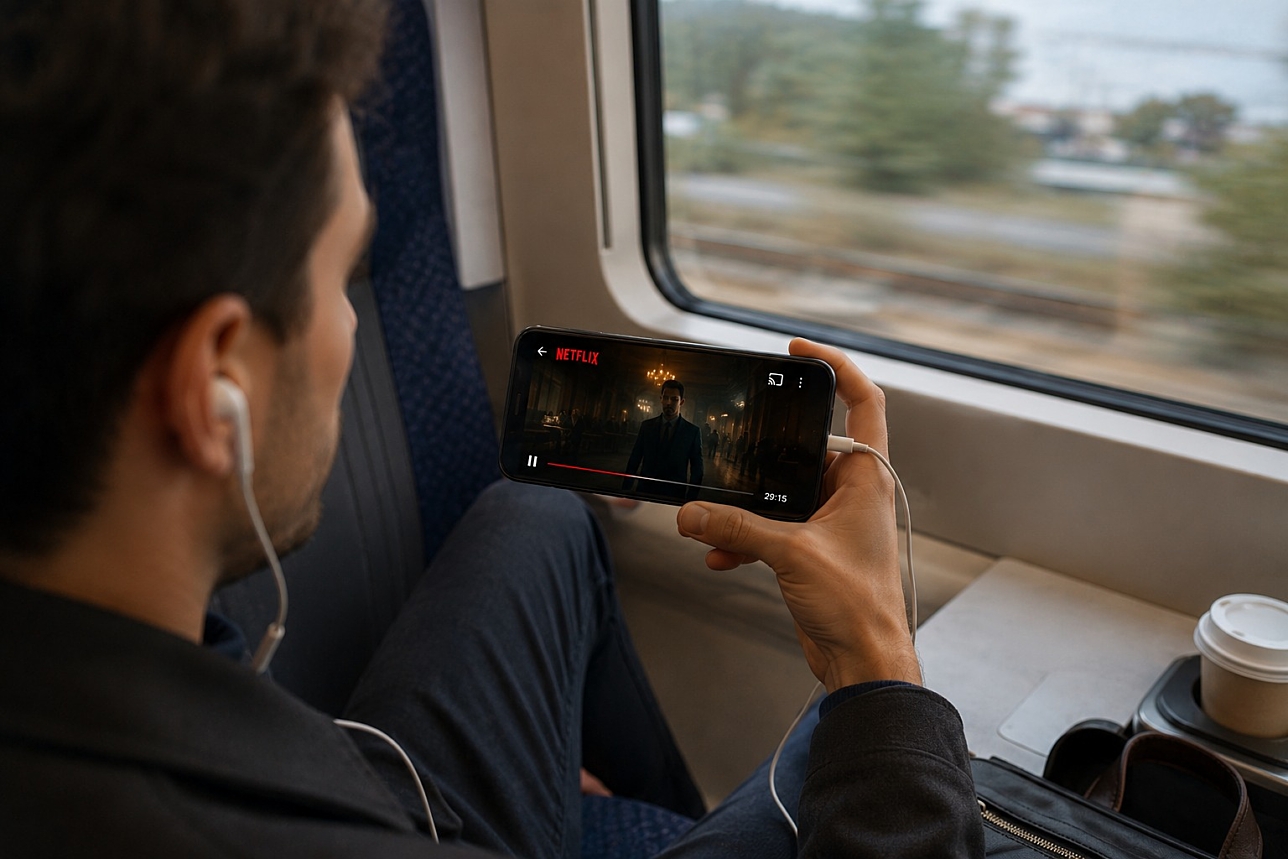
Video is usually the biggest threat to a limited mobile data allowance. Netflix states that streaming can use up to around 0.3 GB per hour on Low quality, 0.7 GB on Medium, 3 GB in HD and as much as 7 GB per hour in 4K. On its mobile Data Saver setting, Netflix says approximately six hours of viewing can fit into 1 GB. Other video platforms vary, but the principle is the same: higher resolution means significantly higher data consumption. If you regularly watch films, series or long videos away from Wi-Fi, you will need considerably more data than someone who mainly messages and browses.

Video Calls Can Make A Big Difference
Video calling sits somewhere between everyday communication and full video streaming when it comes to data consumption. Apps such as WhatsApp, Zoom and Google Meet need to continuously send and receive audio and video, so longer calls can consume a noticeable part of a smaller data plan. Actual usage depends on factors such as video quality, connection strength, device and whether it is a one-to-one or group call. If you regularly work remotely or video call family while away from Wi-Fi, it is worth allowing several extra gigabytes each month.
Is 1 GB, 5 GB Or 10 GB Enough?
For a very light user who mainly sends messages, checks email and occasionally uses maps, 1 GB may still be enough. Around 5 GB gives you much more freedom for everyday browsing, navigation, music and some social media, particularly if you use Wi-Fi at home and at work. A 10 GB allowance is more comfortable for regular social media users, music streaming and occasional video away from Wi-Fi. Once you regularly stream video, make long video calls, use your phone as a hotspot or spend hours scrolling through Reels and TikTok, 20 GB or more can become much more realistic.
When Does Unlimited Data Make Sense?
Unlimited data is convenient, but not everyone actually needs it. If your phone spends most of the day connected to Wi-Fi, paying extra for unlimited mobile data may offer little benefit. It becomes more useful if you commute frequently, stream lots of video or music on the move, regularly use a personal hotspot or simply do not want to monitor your monthly consumption. Before choosing an unlimited plan, check the terms carefully: some providers apply fair-use policies, speed restrictions or separate limits for roaming and hotspot usage.
Keep An Eye On Your Prepaid Data And Credit
With prepaid mobile services, knowing how much data you use can also help you decide when it is time to top up. Running out unexpectedly is particularly inconvenient when travelling or when you rely on mobile data for navigation and communication. If you or someone in your family uses a supported prepaid number, Mitti makes it possible to send mobile credit directly to prepaid phones around the world. It is a simple way to add credit when needed, whether the recipient is nearby or in another country.
There is no single perfect amount of mobile data for everyone. If you mainly message, browse and use maps, a smaller allowance may be perfectly sufficient, while social media, video calls and streaming can quickly push your needs towards 10 GB, 20 GB or more. Check your phone's recent data usage before choosing your next plan and pay attention to which apps consume the most. The best data allowance is not the biggest one, but the one that matches how you actually use your phone.